
Page • To meet aggressive national goals for significantly reducing petroleum use and greenhouse gas emissions requires major improvements in all aspects of the nation’s energy use. Combustion processes have historically dominated electrical power production and transportation systems. Despite major advances in improving the efficiency and reducing the costs of alternative energy...
Search
Experimental Capabilities
Page • Sandia Labs scientists invented and developed ground-breaking scientific and engineering capabilities—both experimental and computational—which laid the foundation for today’s combustion research model. Built in the early 1970s, on the promise that laser beams could be used to interrogate hostile environments, Sandia’s Combustion Research Facility (CRF) is now world renowned for...
Experimental Turbulent Combustion Research
Page • Example turbulent flame configurations used for fundamental studies of turbulence-chemistry interactions. Different flow configurations and fuels provide a progression of complexity with respect to fluid dynamics and chemical kinetics. Systematic experimental studies of these flames using laser diagnostics are combined with theory and modeling to advance our understanding of the...
Fabulous at Forty!
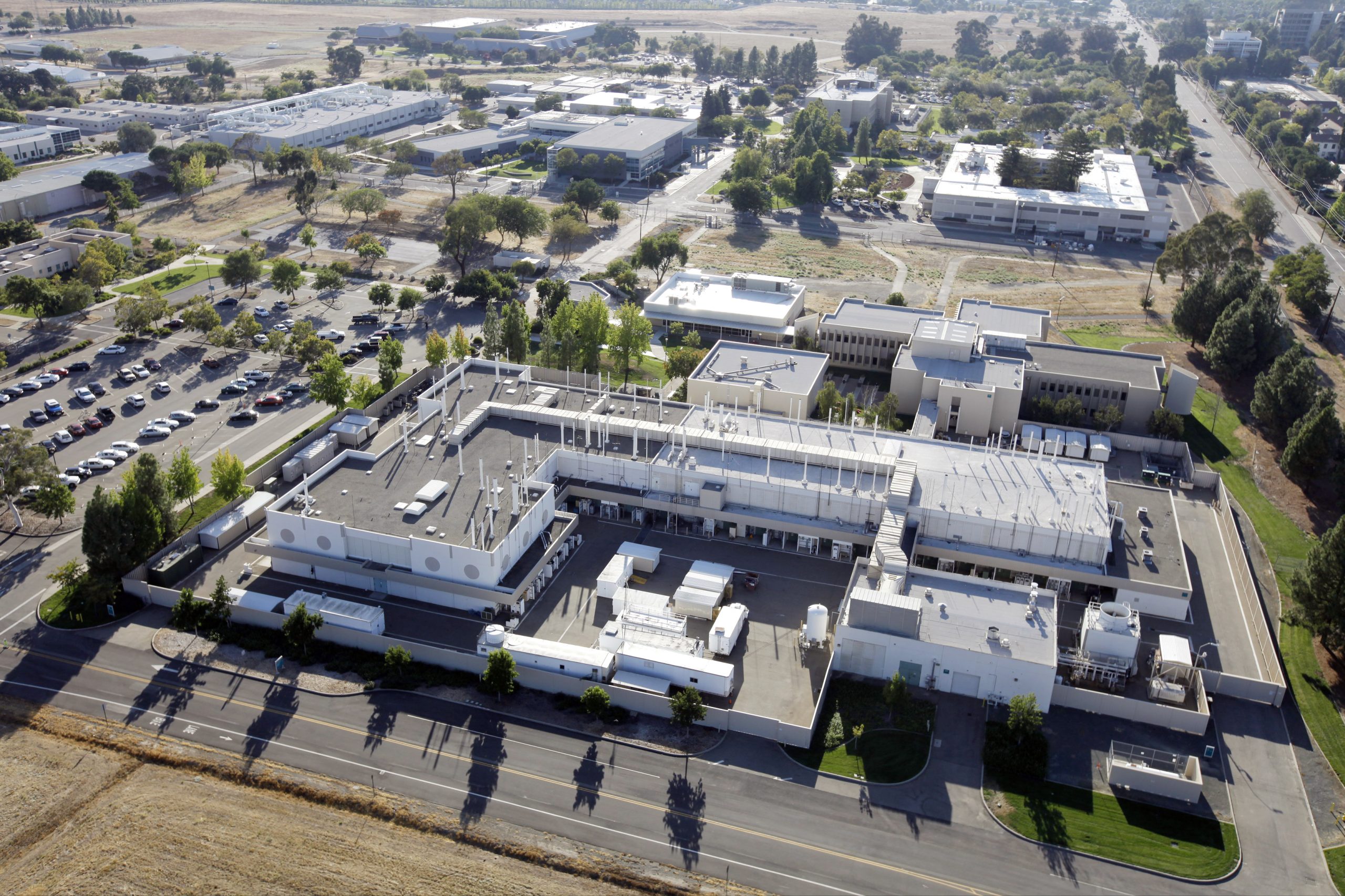
Post, April 5, 2021 • Fueling the Future Established at Sandia National Laboratories in Livermore, California, as the first U.S. Department of Energy (DOE) user facility, since the early 1980s the Combustion Research Facility (CRF) has served as a national and international leader in combustion science and technology for more than 40 years. As the...
Fast, Accurate Turbulent Combustion Simulations
Post, April 1, 2026 • Cristian Lacey and Jackie Chen, together with researchers from Ulsan National Institute of Science and Technology (Korea) and Pukyong National University (Korea), have published a paper entitled "Time-dependent-bases with local CUR decomposition method for accelerating turbulent combustion simulations" in Combustion and Flame. This work presents a reduced-order modeling framework that...
Finding a molecular needle in a haystack
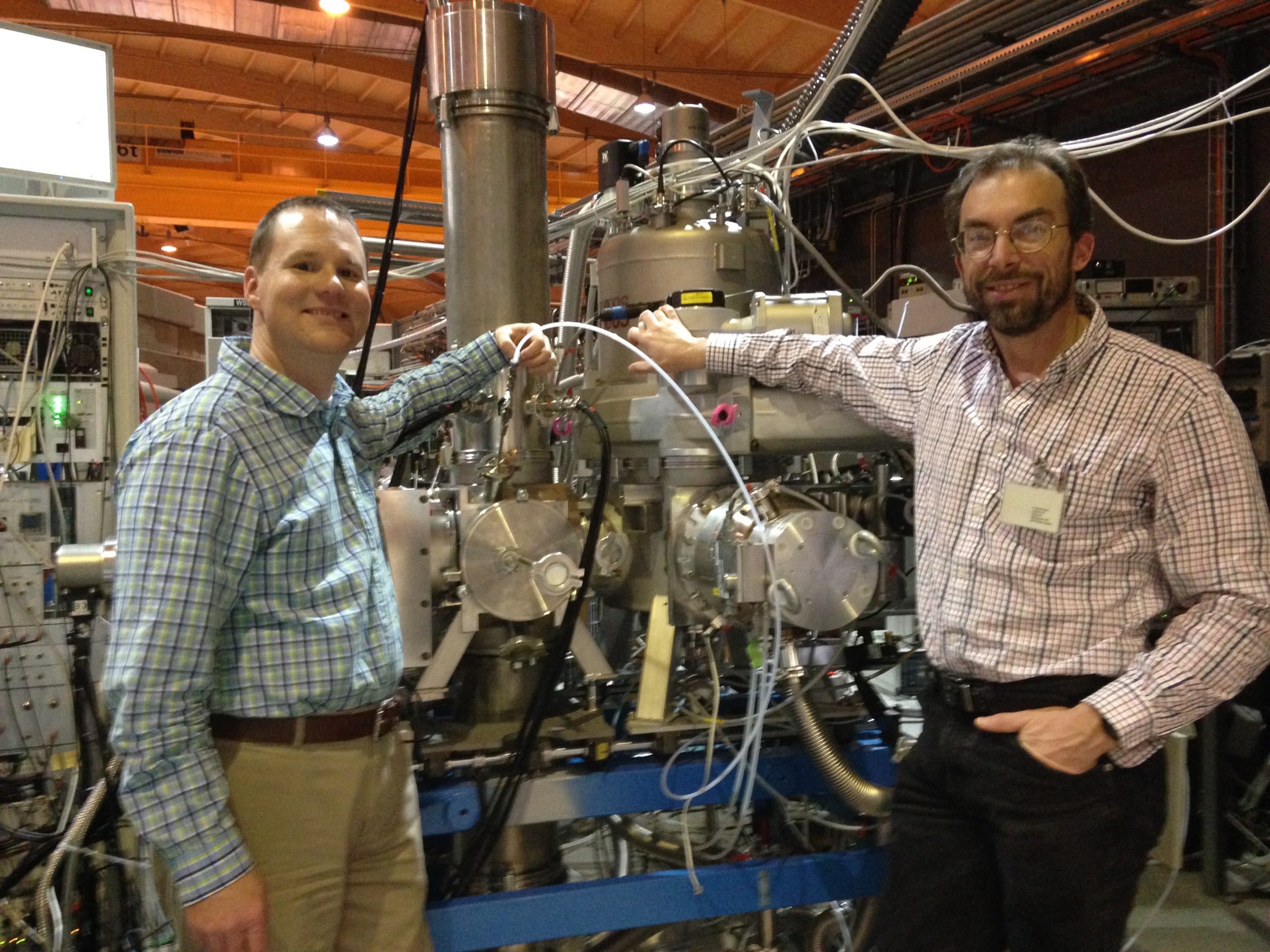
Post, July 7, 2017 • Bálint Sztáray, left, from the University of the Pacific, and Sandia National Laboratories chemist David Osborn display the PEPICO instrument. Sandia Labs creates better ‘fingerprints’ to detect elusive, valuable chemical compounds By Sarah Sewel Imagine being able to see the entire Statue of Liberty and a small ant on its...
Fuel property put to the test
Post, March 9, 2021 • Sandia postdoc receives SAE Excellence in Oral Presentation Award for phi-sensitivity research Understanding the fundamentals of phi-sensitivity, a key fuel property that represents how the autoignition reactivity of the fuel varies with the fuel/air equivalence ratio, will help us increase the efficiency and facilitate the development of practical low-temperature gasoline...
Fusion
Page • Sandia researchers have long supported DOE Fusion Energy Science efforts to make magnetic confinement fusion a practical source of electrical power. To develop this technology, Sandia’s work includes plasma-material interactions, boundary physics measurements at the DIII-D tokamak facility in San Diego, and fusion reactor blanket materials and the associated tritium...
Gallery
Page • CRF researchers (left to right) Scott Skeen (now at Dixie State University), Nils Hansen, and postdoc Brian Adamson (now at ThermoFisher) around the tandem mass spectrometer they used to study the structure of large hydrocarbon molecules in a sooting flame. (Photo credit: Michael Padilla) Hydrogen Production
Gasoline Combustion Fundamentals Laboratory
Page • Aggressive DOE Vehicle Technologies Program (VTP) gasoline engine fuel-economy and pollutant- emission targets can be met through some combination of reduced heat transfer, lower throttling losses, shorter combustion durations, lower combustion temperatures, improved mixture preparation, and higher compression ratios. Charge dilution by air or exhaust gas recirculation (EGR) is the...
Results 41–50 of 130