
Recent Posts
-
A quantitative look at electron collisions with excited state molecules
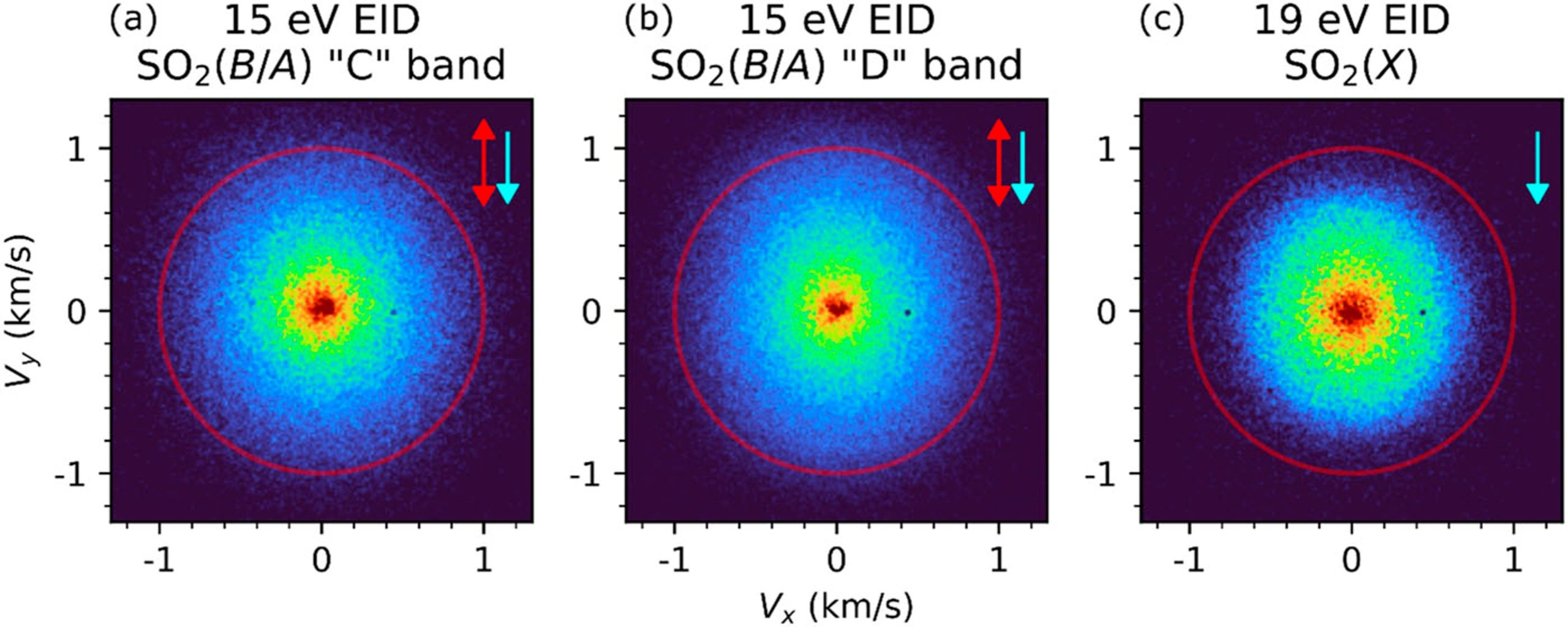
The details of electron interactions with excited-state molecules can be important in plasma processes but are experimentally elusive. CRF researchers Jonathan Frank and Dave Chandler, together with postdocs Haw-Wei Lin and Eric Smoll, developed a way to measure these interactions and employed it in their paper “Electron-ionization-dissociation dynamics of laser-excited SO2 (B 1B1/A 1A2) studied using velocity map imaging,” published in “The Journal of Chemical Physics”.…
-
Laser-Driven Control of Bond-Breaking
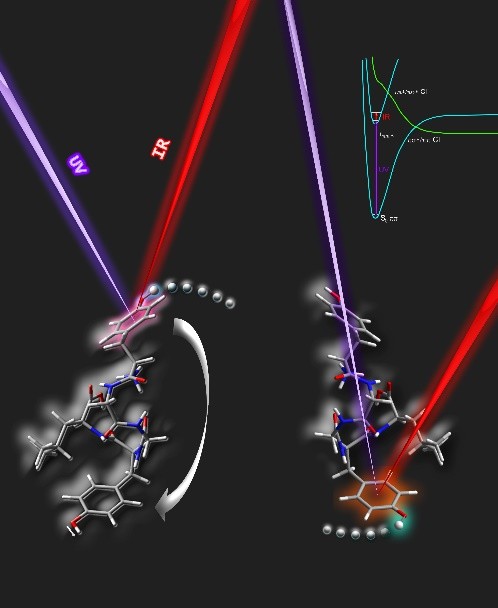
Controlling the course of a chemical reaction by mode-selective laser excitation is typically thwarted by the rapid delocalization of the energy, especially in large molecules. CRF researchers Tim Zwier, Kendrew Au, Chin Lee, and Kyung-Chul Woo, together with colleagues from Purdue University, University of Nevada, Reno, and Fairfield University, discovered a method for steering quantum tunneling…
-
Molecular Cage Adapts its Shape to its Contents
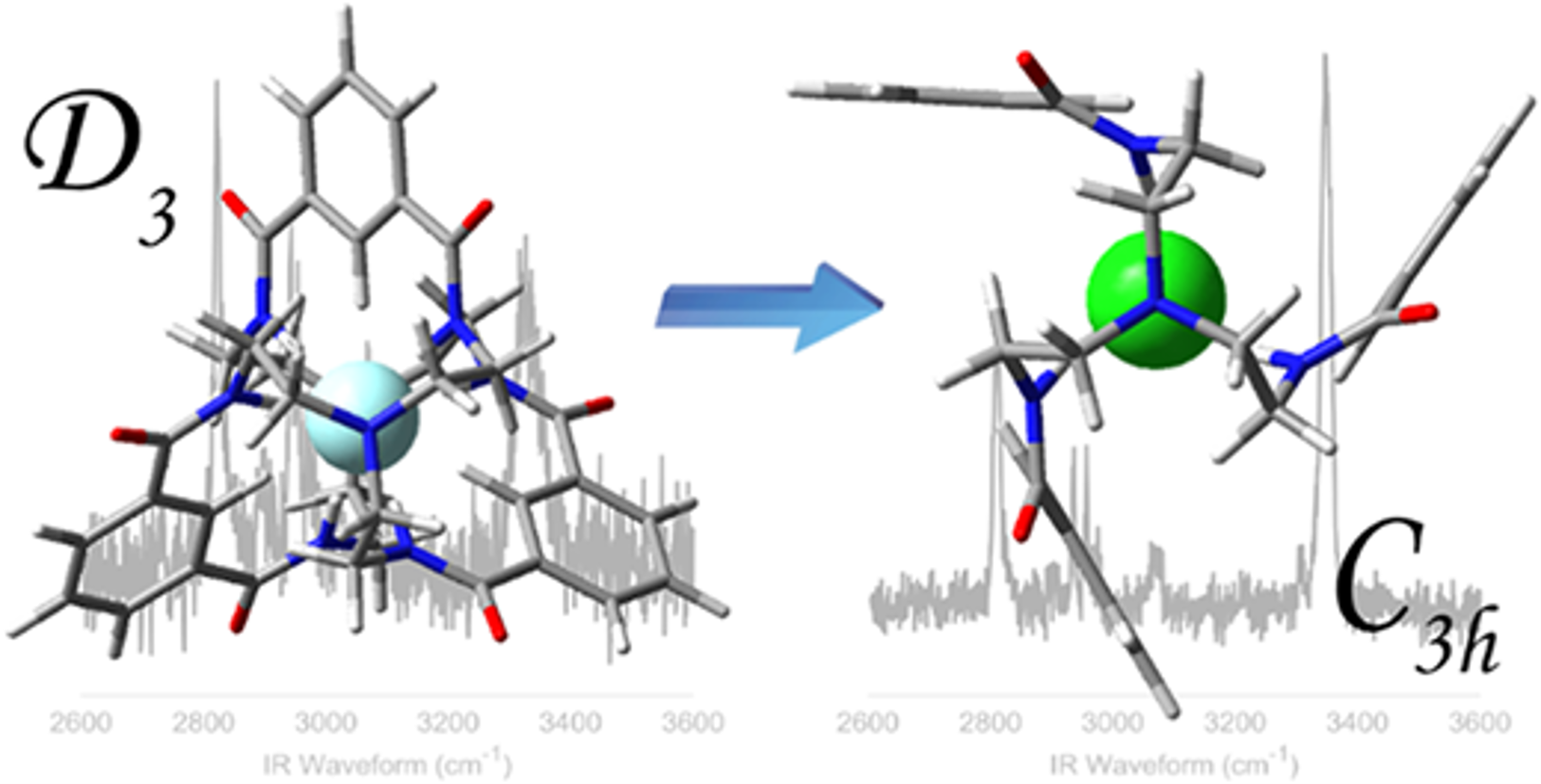
Molecular cages that sequester certain ions can be important for designing new strategies for selective capture of critical elements from aqueous solution. Using advanced theory and unique spectroscopy methods available at Sandia, CRF researchers Tim Zwier, Chin Lee, and Kendrew Au, together with Sandia colleague Jessica Rimsza and collaborators from LANL, Texas A&M, and the University…
-
Theory of the tunneling ‘switch’

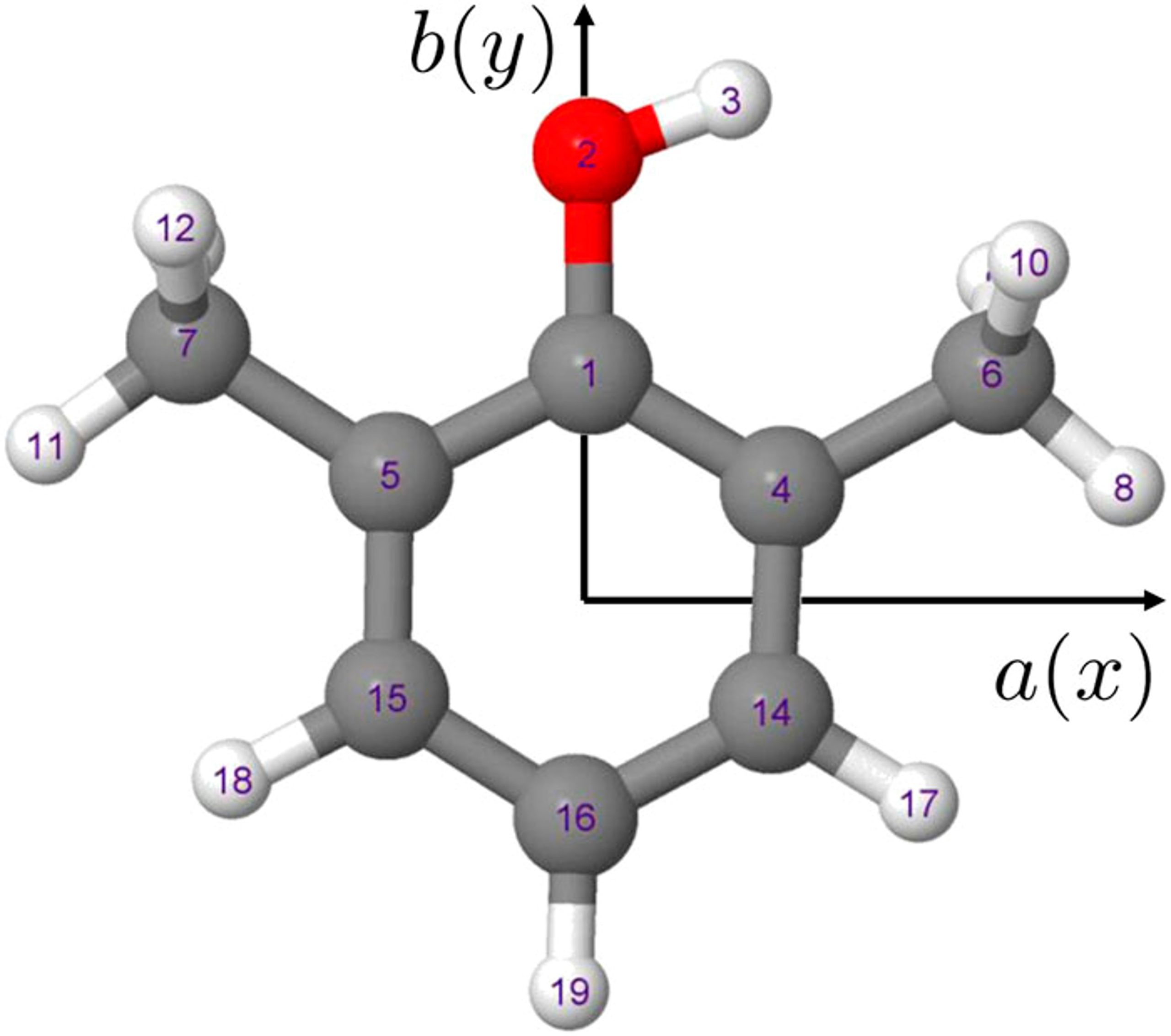
CRF researcher Timothy Zwier, together with Edwin Sibert from the University of Wisconsin-Madison, published a paper on “On the role of symmetry in quenching OH tunneling in 2,6-dimethylphenol” in “The Journal of Chemical Physics”, providing more detailed theoretical descriptions of recent experiments that were interpreted to show that certain symmetry states of neighboring methyl groups could…
-
CRF Recognizes Researchers for Outstanding Contributions
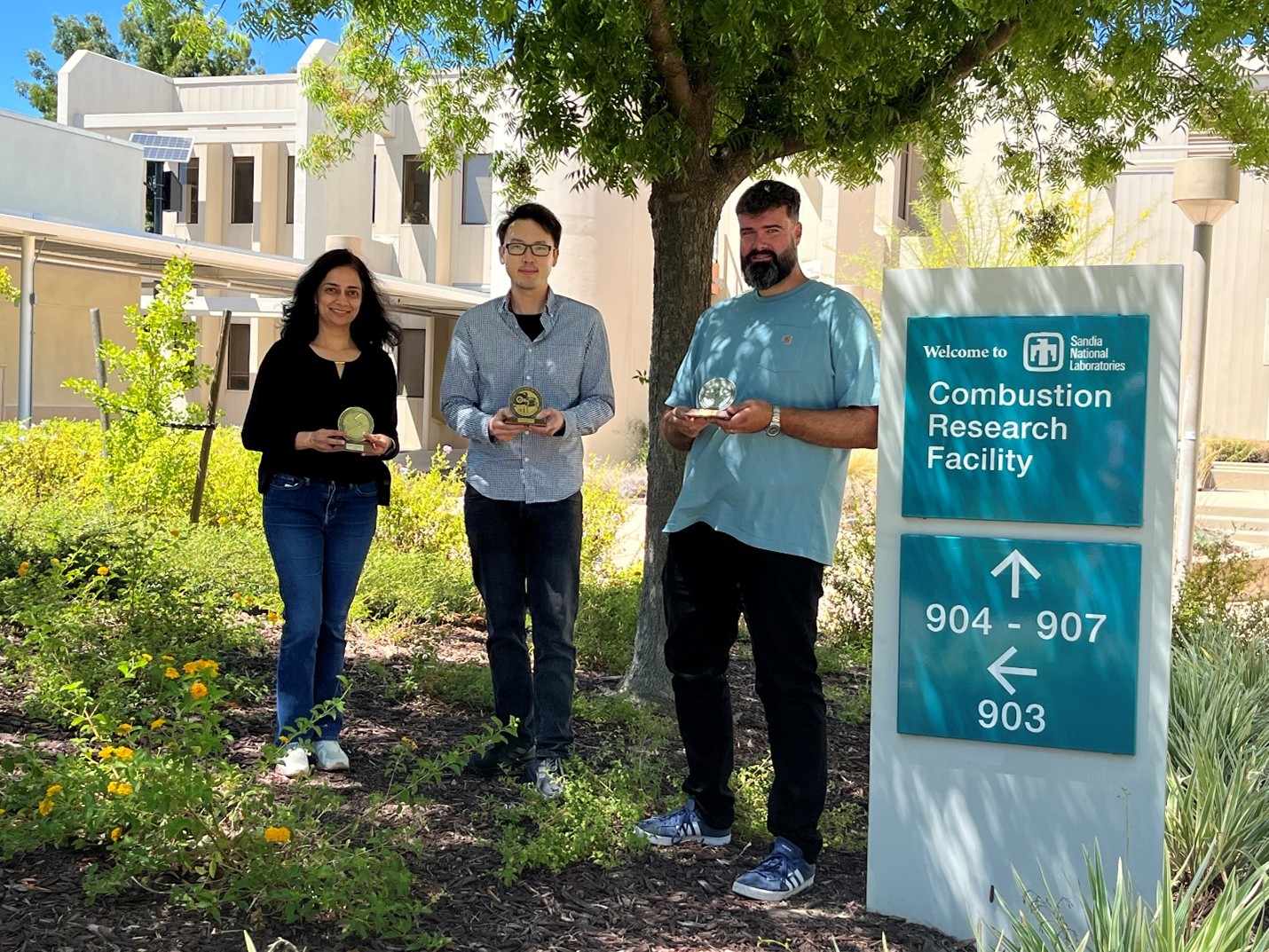
CRF Recognizes Researchers for Outstanding Contributions
-
Plasma-assisted conversion of siloxanes
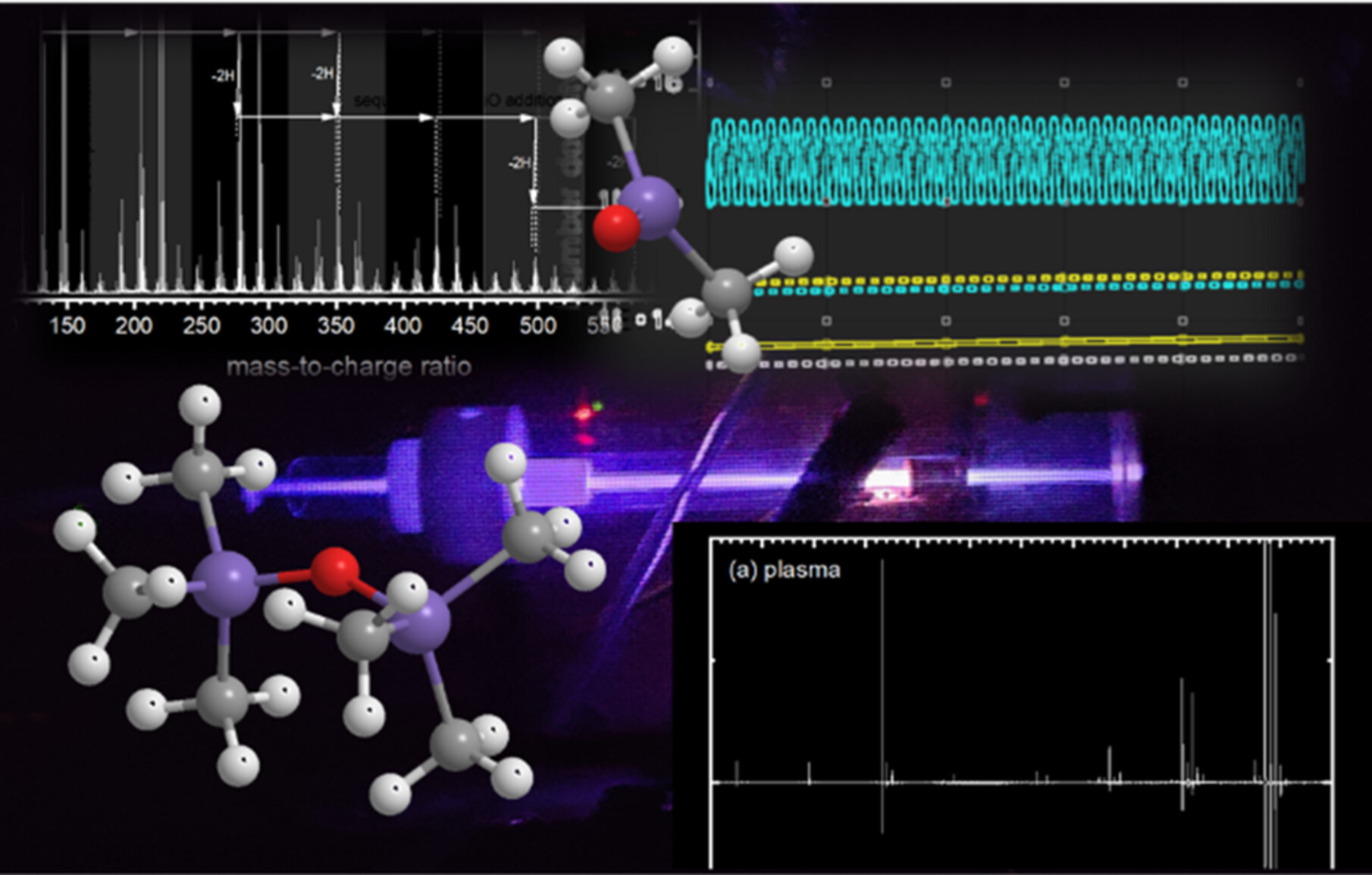
Siloxanes (organosilicon compounds with silicon–oxygen (Si–O–Si) structures) have a broad range of technology applications, and understanding their chemical transformations is important both for industrial uses and for managing their disposal. Emma Litzer and Nils Hansen, together with colleagues Tanvir I. Farouk, Prangan Nandy, Raziya S. Chowdhury and Shamia Hoque from the University of South Carolina,…
-
Foundation Models Accelerate Gas-Phase Kinetics Calculations
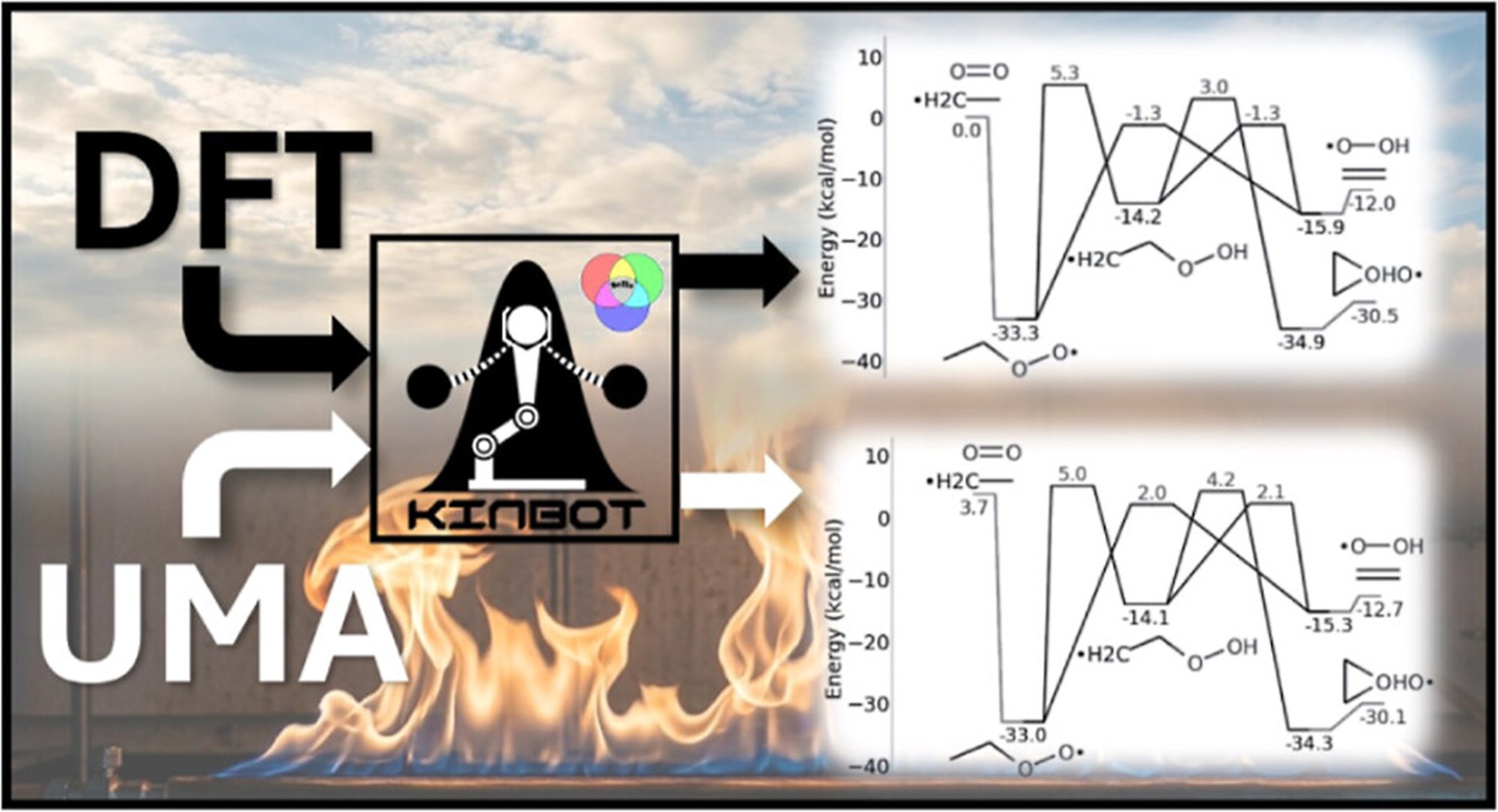
Judit Zádor, together with CRF summer intern Daniel Kendall (UCLA), published a paper in “The Journal of Physical Chemistry A” on “Benchmarking the UMA Foundation Interatomic Potential for Gas-Phase Chemical Kinetics”. In this work, the authors use the automated KinBot workflow to benchmark Meta’s Universal Models for Atoms (UMA) foundation model for gas-phase kinetics applications across…
-
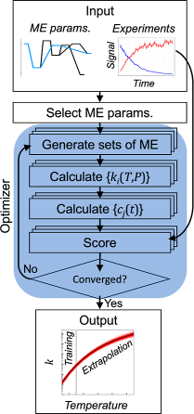
Automated Development of a Comprehensive Microkinetic Model for Catalysis
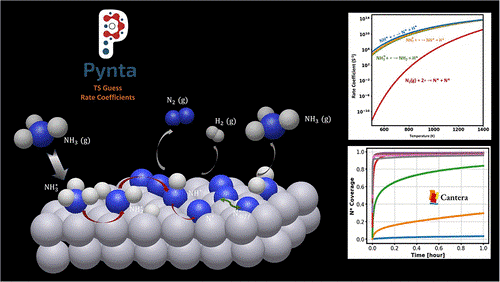
Automated Development of a Comprehensive Microkinetic Model for Catalysis
-
New Formation Mechanism for Surface Oxide Observed in Pt Catalysis
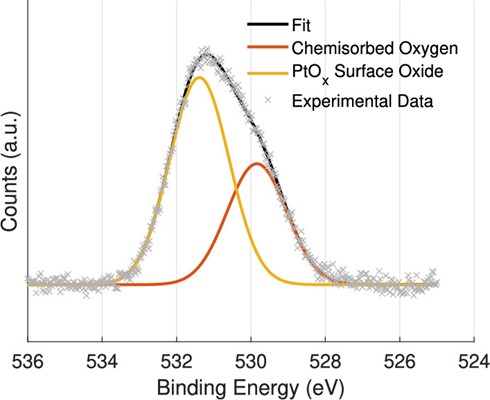
New Formation Mechanism for Surface Oxide Observed in Pt Catalysis
-
Generative Design of Active Sites on Arbitrary Catalysts

Judit Zádor co-organized this year’s “Faraday Discussion on Bridging the gap from surface science to heterogeneous catalysis” that was held in London, United Kingdom, April 20th-22nd. At this meeting she and fellow CRF researcher Matthew Johnson presented their development, with collaborator Richard West from Northeastern University, of an interpretable machine-learning framework using Subgraph Isomorphic Decision Trees…
See Previous Posts