Search

Results 51–60 of 130

Habib N. Najm

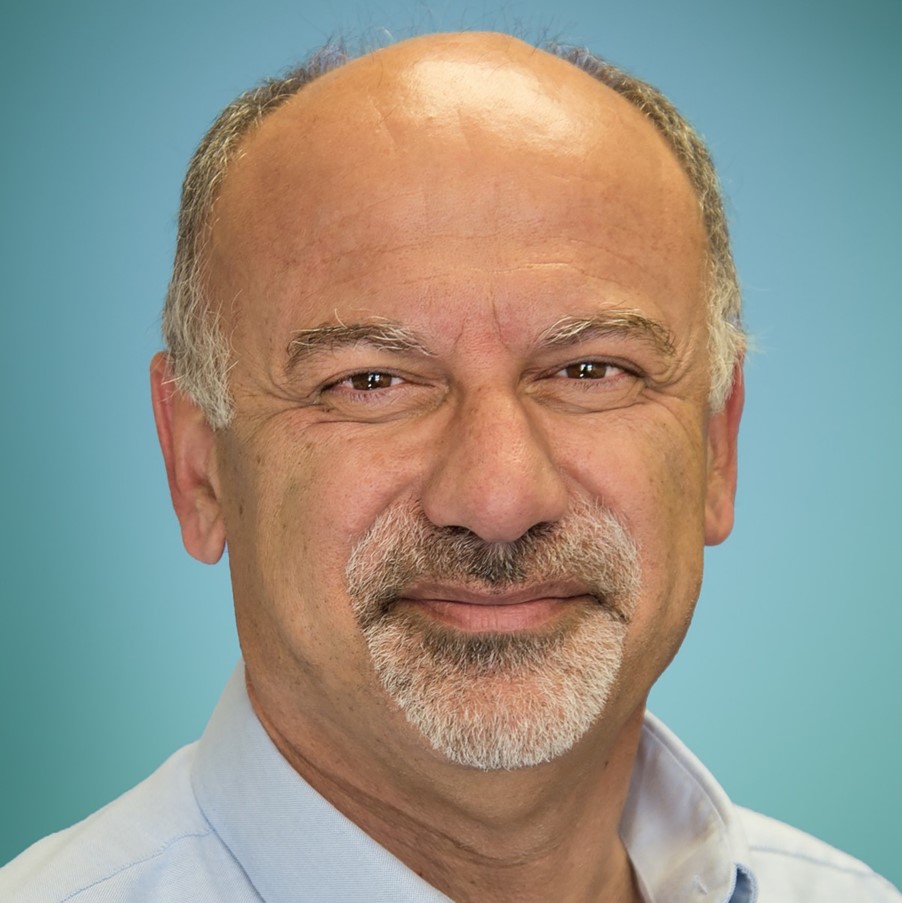
Staff Page • Senior Scientist, Combustion Research Facility. Biography Habib Najm is a Senior Scientist at Sandia National Laboratory. He leads a research program in computational chemical sciences and uncertainty quantification, funded by the U.S. Department of Energy. He joined Sandia National Laboratories in 1993, and has worked in numerous computational science research...
Hanging out with the stars

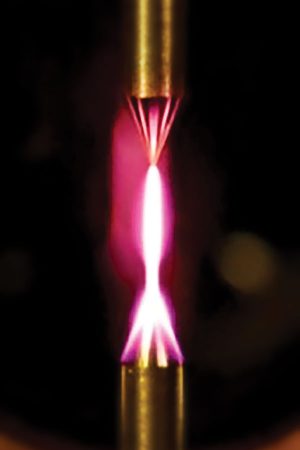
Post, March 8, 2021 • Sandia establishes collaborative research facility to study pervasive and versatile low-temp plasmas Low-temperature plasma—the most pervasive state of matter in the universe—consists of gaseous mixtures of ions and electrons that interact with background neutral atoms or molecules to make them reactive. It also generates energetic photons. All this activity means...

Heavy-Duty Diesel and Gaseous-Fueled Engine Laboratory

Page • The Heavy-Duty Diesel and Gaseous-Fueled Engine Laboratory uses laser-based and imaging diagnostics to develop the science base of in-cylinder processes needed by the heavy-duty engine industry. Our research provides engineers with the necessary understanding to design cleaner, more fuel-efficient engines. Fuel injection, combustion processes, and emissions formation are studied in...

Heavy-Duty Engine Combustion and Fuel Effects Lab

Page • The Heavy-Duty Engine Combustion and Fuel Effects Laboratory centers around a modern 1.7-liter, single-cylinder diesel engine that has been modified to provide extensive optical access to the combustion chamber. Researchers apply advanced imaging, laser-based, and conventional diagnostics to gain a fundamental understanding of the detailed in-cylinder mixing and combustion processes...

High school engineering students visit CRF

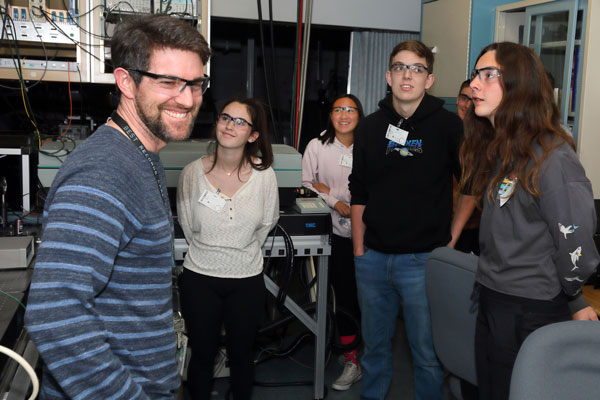
Post, March 9, 2021 • Livermore High School science teacher Karen Fletcher and 12 sophomore students from the Green Engineering Academy got to see applied science in action during a Feb. 19, 2020, visit to Sandia’s California campus. Students met several Sandia engineers who shared their combustion research expertise. James Siacunco talked about his career...

High-Pressure FAGE

Page • High Pressure Fluorescence Assay for Gas Expansion (FAGE) for quantification of short-lived reaction intermediates Figure 1 High-pressure laminar flow reactor, coupled to FAGE detection chamber Technical Details Many important gas-phase processes, such as combustion or the atmospheric processing of pollutants, are complex networks of chemical reactions that occur simultaneously and involve...

Hydrogen

Page • Sandia National Laboratories contributes to the science of advanced hydrogen and fuel cell (H2FC) technologies by providing a deep, quantitative understanding and scientific basis for materials and safety. Through its H2FC program, Sandia researches and develops methods to discover materials for hydrogen production, storage and use, evaluating their properties and...

Imaging of Ions and Electrons for Study of Chemical Reactivity

Page • Technical Details Figure 1 Ion imaging was first demonstrated at Sandia National Labs in 1987 by a collaborative research effort between Dr. David Chandler (Sandia) and Dr. Paul Houston (Cornell University). Since then, more than 100 other laboratories have adopted this technique for the study of photochemistry, bimolecular reactivity, energy...

Imaging the Near-Surface Gas Phase

Page • Figure 5 The chemical reactivity of gases with solid surfaces is ubiquitous in natural and industrial energy transformation. Cooperative effects that couple gas phase chemistry with surface chemistry are critical for foundational understanding, but they prove challenging to probe experimentally and theoretically. Heterogenous catalysis is an ideal field in which...

Improving understanding of advanced Light-Emitting Materials

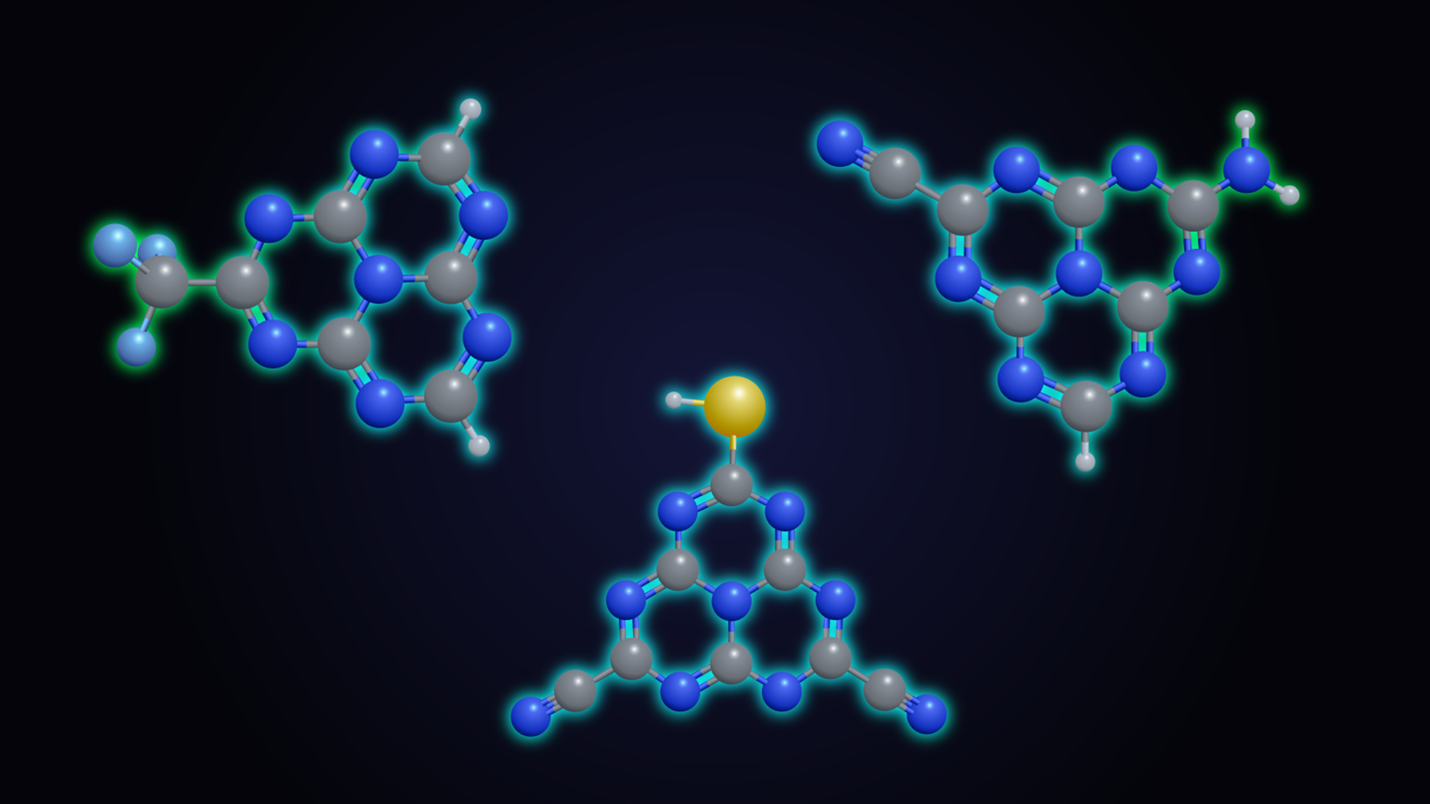
Post, December 3, 2025 • Laura McCaslin, CRF postdocs Varun Rishi and Ali Abou Taka and Hrant Hratchian (UC Merced), published a paper in "The Journal of Physical Chemistry Letters" on "Quantifying Design Principles for Light-Emitting Materials with Inverted Singlet–Triplet Energy Gaps." Most organic light-emitting materials lose efficiency because 75% of excitons are non-emissive triplets....
Results 51–60 of 130