
Page • Example turbulent flame configurations used for fundamental studies of turbulence-chemistry interactions. Different flow configurations and fuels provide a progression of complexity with respect to fluid dynamics and chemical kinetics. Systematic experimental studies of these flames using laser diagnostics are combined with theory and modeling to advance our understanding of the...
Search
Fabulous at Forty!
Post, April 5, 2021 • Fueling the Future Established at Sandia National Laboratories in Livermore, California, as the first U.S. Department of Energy (DOE) user facility, since the early 1980s the Combustion Research Facility (CRF) has served as a national and international leader in combustion science and technology for more than 40 years. As the...
Fast, Accurate Turbulent Combustion Simulations
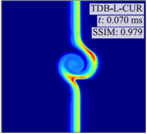
Post, April 1, 2026 • Cristian Lacey and Jackie Chen, together with researchers from Ulsan National Institute of Science and Technology (Korea) and Pukyong National University (Korea), have published a paper entitled "Time-dependent-bases with local CUR decomposition method for accelerating turbulent combustion simulations" in Combustion and Flame. This work presents a reduced-order modeling framework that...
Finding a molecular needle in a haystack
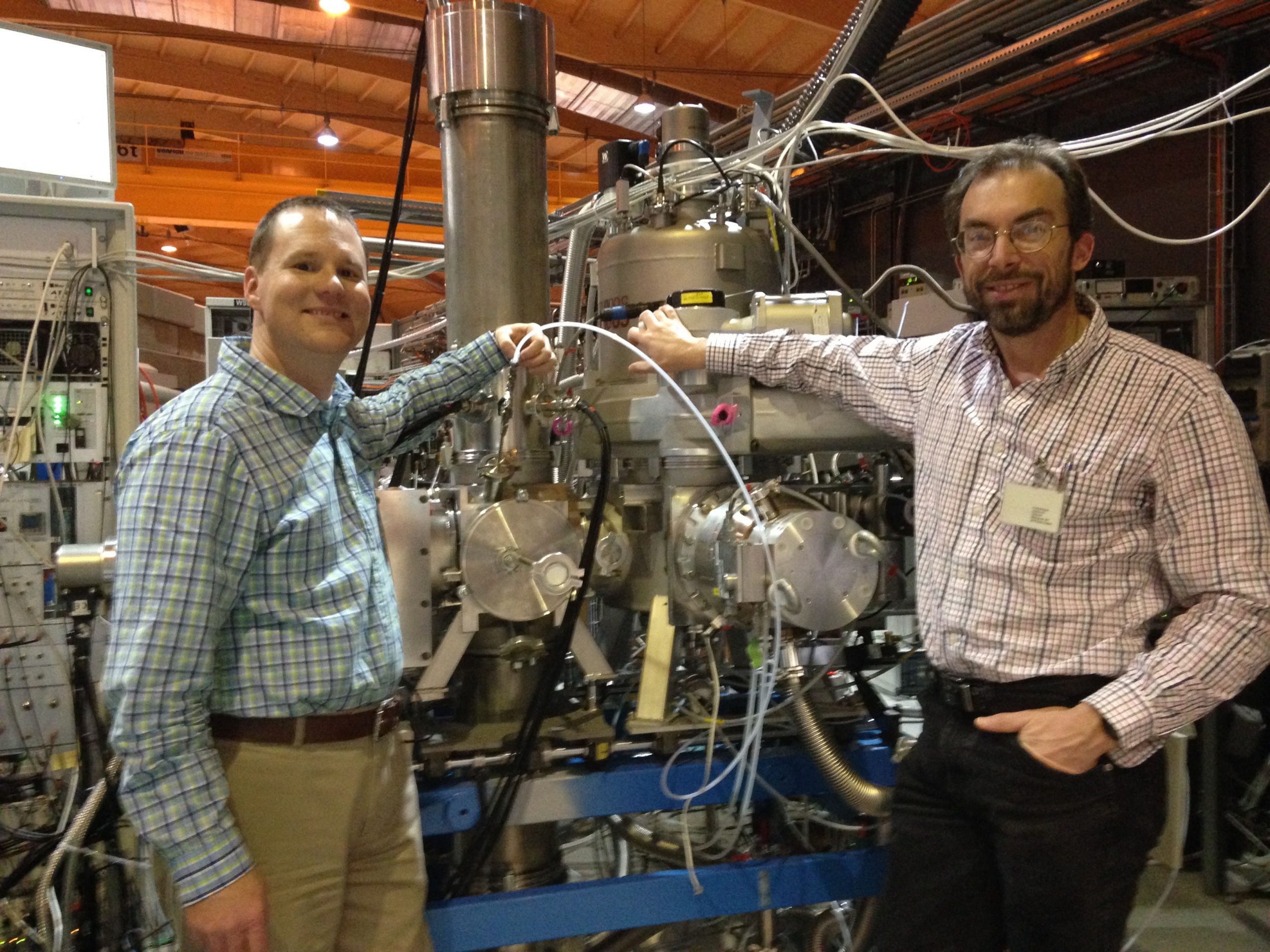
Post, July 7, 2017 • Bálint Sztáray, left, from the University of the Pacific, and Sandia National Laboratories chemist David Osborn display the PEPICO instrument. Sandia Labs creates better ‘fingerprints’ to detect elusive, valuable chemical compounds By Sarah Sewel Imagine being able to see the entire Statue of Liberty and a small ant on its...
Foundation Models Accelerate Gas-Phase Kinetics Calculations
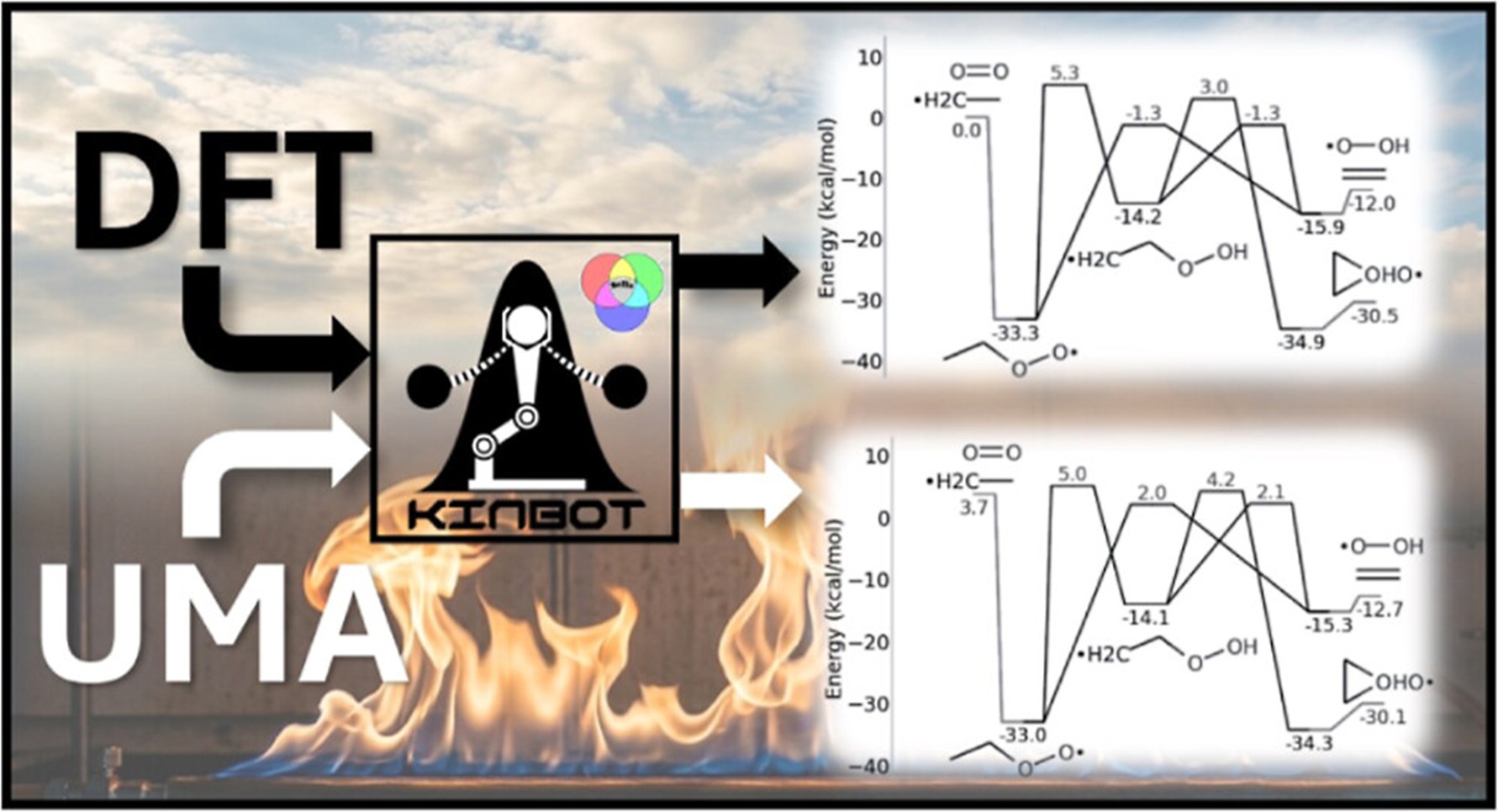
Post, June 16, 2026 • Judit Zádor, together with CRF summer intern Daniel Kendall (UCLA), published a paper in "The Journal of Physical Chemistry A" on "Benchmarking the UMA Foundation Interatomic Potential for Gas-Phase Chemical Kinetics". In this work, the authors use the automated KinBot workflow to benchmark Meta’s Universal Models for Atoms (UMA) foundation model...
Fuel property put to the test
Post, March 9, 2021 • Sandia postdoc receives SAE Excellence in Oral Presentation Award for phi-sensitivity research Understanding the fundamentals of phi-sensitivity, a key fuel property that represents how the autoignition reactivity of the fuel varies with the fuel/air equivalence ratio, will help us increase the efficiency and facilitate the development of practical low-temperature gasoline...
Fusion
Page • Sandia researchers have long supported DOE Fusion Energy Science efforts to make magnetic confinement fusion a practical source of electrical power. To develop this technology, Sandia’s work includes plasma-material interactions, boundary physics measurements at the DIII-D tokamak facility in San Diego, and fusion reactor blanket materials and the associated tritium...
Gallery
Page • CRF researchers (left to right) Scott Skeen (now at Dixie State University), Nils Hansen, and postdoc Brian Adamson (now at ThermoFisher) around the tandem mass spectrometer they used to study the structure of large hydrocarbon molecules in a sooting flame. (Photo credit: Michael Padilla) Hydrogen Production
Gasoline Combustion Fundamentals Laboratory
Page • Aggressive DOE Vehicle Technologies Program (VTP) gasoline engine fuel-economy and pollutant- emission targets can be met through some combination of reduced heat transfer, lower throttling losses, shorter combustion durations, lower combustion temperatures, improved mixture preparation, and higher compression ratios. Charge dilution by air or exhaust gas recirculation (EGR) is the...
Generative Design of Active Sites on Arbitrary Catalysts
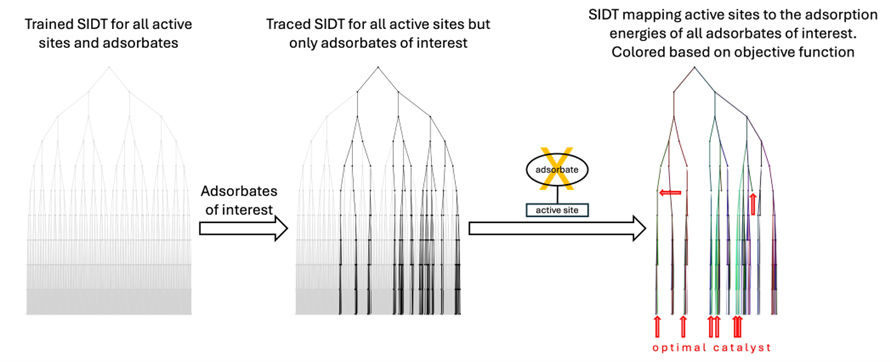
Post, June 12, 2026 • Judit Zádor co-organized this year's "Faraday Discussion on Bridging the gap from surface science to heterogeneous catalysis" that was held in London, United Kingdom, April 20th-22nd. At this meeting she and fellow CRF researcher Matthew Johnson presented their development, with collaborator Richard West from Northeastern University, of an interpretable machine-learning framework...
Hanging out with the stars
Post, March 8, 2021 • Sandia establishes collaborative research facility to study pervasive and versatile low-temp plasmas Low-temperature plasma—the most pervasive state of matter in the universe—consists of gaseous mixtures of ions and electrons that interact with background neutral atoms or molecules to make them reactive. It also generates energetic photons. All this activity means...
Heavy-Duty Diesel and Gaseous-Fueled Engine Laboratory
Page • The Heavy-Duty Diesel and Gaseous-Fueled Engine Laboratory uses laser-based and imaging diagnostics to develop the science base of in-cylinder processes needed by the heavy-duty engine industry. Our research provides engineers with the necessary understanding to design cleaner, more fuel-efficient engines. Fuel injection, combustion processes, and emissions formation are studied in...
Heavy-Duty Engine Combustion and Fuel Effects Lab
Page • The Heavy-Duty Engine Combustion and Fuel Effects Laboratory centers around a modern 1.7-liter, single-cylinder diesel engine that has been modified to provide extensive optical access to the combustion chamber. Researchers apply advanced imaging, laser-based, and conventional diagnostics to gain a fundamental understanding of the detailed in-cylinder mixing and combustion processes...
High school engineering students visit CRF
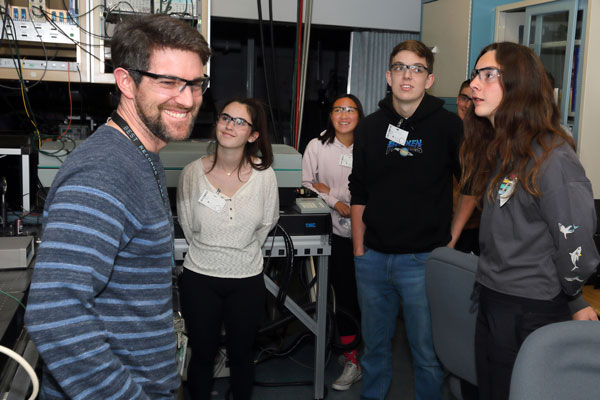
Post, March 9, 2021 • Livermore High School science teacher Karen Fletcher and 12 sophomore students from the Green Engineering Academy got to see applied science in action during a Feb. 19, 2020, visit to Sandia’s California campus. Students met several Sandia engineers who shared their combustion research expertise. James Siacunco talked about his career...
High-Performance Computing
Page • To meet aggressive national goals for significantly reducing petroleum use and greenhouse gas emissions requires major improvements in all aspects of the nation’s energy use. Combustion processes have historically dominated electrical power production and transportation systems. Despite major advances in improving the efficiency and reducing the costs of alternative energy...
High-Pressure FAGE
Page • High Pressure Fluorescence Assay for Gas Expansion (FAGE) for quantification of short-lived reaction intermediates Figure 1 High-pressure laminar flow reactor, coupled to FAGE detection chamber Technical Details Many important gas-phase processes, such as combustion or the atmospheric processing of pollutants, are complex networks of chemical reactions that occur simultaneously and involve...
Hydrogen
Page • Sandia National Laboratories contributes to the science of advanced hydrogen and fuel cell (H2FC) technologies by providing a deep, quantitative understanding and scientific basis for materials and safety. Through its H2FC program, Sandia researches and develops methods to discover materials for hydrogen production, storage and use, evaluating their properties and...
Hydrogen Peroxide Formation Mechanisms in Liquid Anode and Cathode Discharges
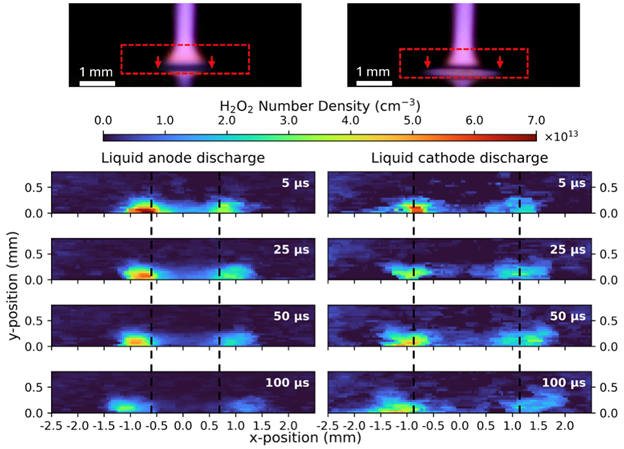
Post, May 27, 2026 • In order to better understand the mechanism for plasma-induced formation of hydrogen peroxide (H2O2), a key reactive species in plasma processing, Jonathan Frank, Erxiong Huang and Sebastian Pfaff from the CRF, with colleagues Jae Hyun Nam and Peter J Bruggeman from the University of Minnesota, carried out spatially and time-resolved...
Imaging of Ions and Electrons for Study of Chemical Reactivity
Page • Technical Details Figure 1 Ion imaging was first demonstrated at Sandia National Labs in 1987 by a collaborative research effort between Dr. David Chandler (Sandia) and Dr. Paul Houston (Cornell University). Since then, more than 100 other laboratories have adopted this technique for the study of photochemistry, bimolecular reactivity, energy...
Imaging the Near-Surface Gas Phase
Page • Figure 5 The chemical reactivity of gases with solid surfaces is ubiquitous in natural and industrial energy transformation. Cooperative effects that couple gas phase chemistry with surface chemistry are critical for foundational understanding, but they prove challenging to probe experimentally and theoretically. Heterogenous catalysis is an ideal field in which...
Improving understanding of advanced Light-Emitting Materials
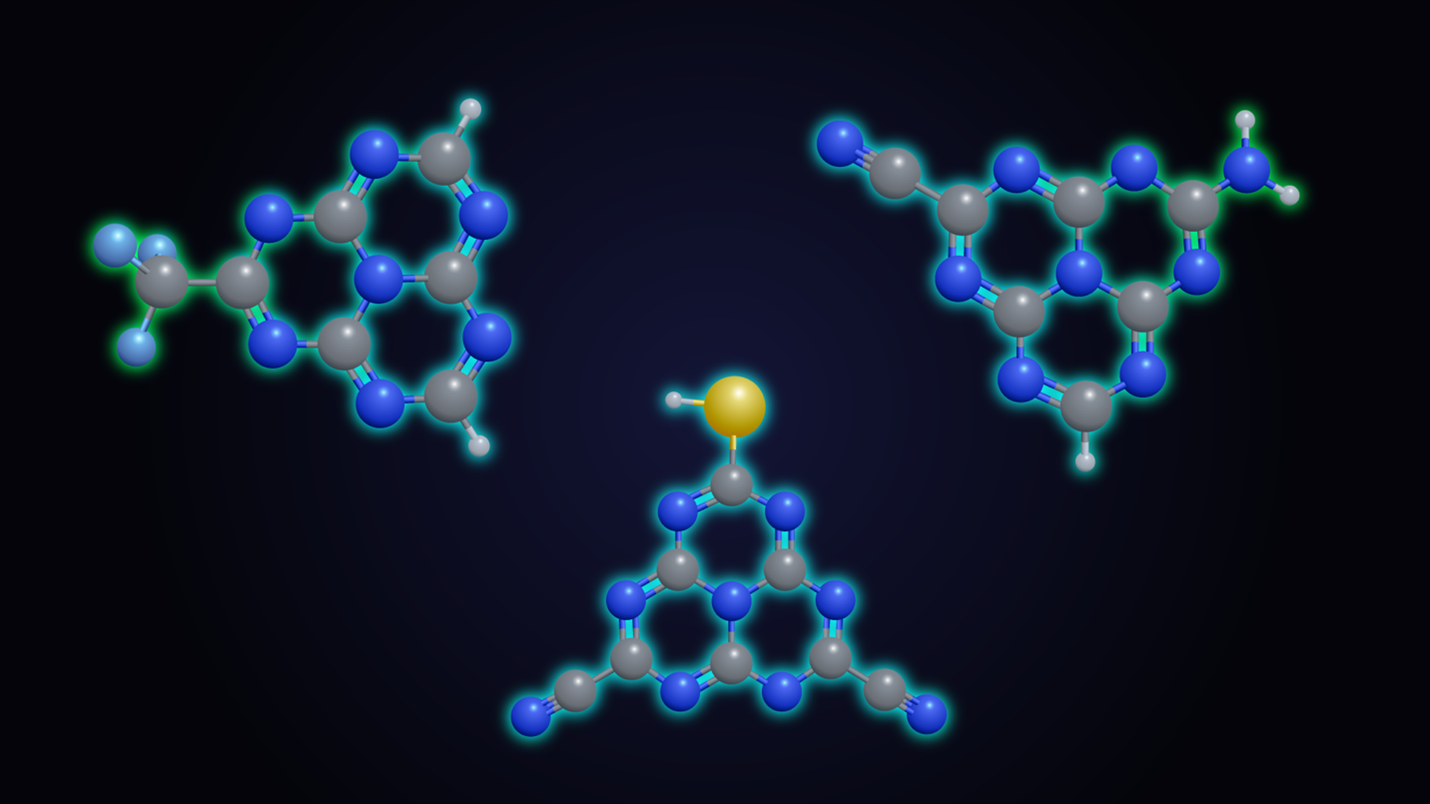
Post, December 3, 2025 • Laura McCaslin, CRF postdocs Varun Rishi and Ali Abou Taka and Hrant Hratchian (UC Merced), published a paper in "The Journal of Physical Chemistry Letters" on "Quantifying Design Principles for Light-Emitting Materials with Inverted Singlet–Triplet Energy Gaps." Most organic light-emitting materials lose efficiency because 75% of excitons are non-emissive triplets....
In Memory of Jim Miller
Post, November 23, 2021 • Jim Miller In Memoriam: Jim Miller (1946–2021) Jim Miller dedicated his life to science while never losing either his warmth and interest in the people around him or his interest in the world. A theorist and research scientist, Jim was known as one of the early developers of CHEMKIN, the...
Integrated Test Capabilities
Page • Building on the strong expertise in diagnostics techniques for elementary processes, described in other sections of Experimental Capabilities, the CRF is a leader in combining multiple advanced diagnostics to completely characterize complex systems and in applying diagnostics to the challenging environments that occur in real-world energy technologies. This approach leads to...
Isaac Wesley Ekoto
Staff Page • Manager, Engine Combustion. Biography Isaac Ekoto earned his PhD in Aerospace Engineering at Texas A&M University in 2006. Isaac has been at Sandia National Laboratories since 2007 where he has worked on projects related to diesel engine combustion and hydrogen safety. He currently is the Principal Investigator of the Gasoline...

Jackie Chen
Staff Page • Senior Scientist, Chemistry, Combustion and Materials Science Center. Biography Jacqueline H. Chen has contributed broadly to research in direct numerical simulations (DNS) of turbulent combustion focusing on fundamental turbulence-chemistry interactions relevant to engines. She is also developing a mesoscopic and continuum simulation framework to understand how nonequilibrium chemical processes affect...

Results 51–75 of 154