Search

Results 76–100 of 140

Kinetics of Elusive Intermediates

Page • Complex chemical reaction networks like those that occur in combustion and in atmospheric chemistry can contain thousands of interlocked chemical transformations. Frequently, important aspects of the overall chemistry depend on a few key reactions, for example, the chain-branching reactions that increase the number of reactive free radicals and drive hydrocarbon...

Kinetics of Hydrocarbon Oxidation

Page • Technical Details Figure 1 Oxidation turns hydrocarbons into water and carbon dioxide through an interconnected web of reactions. The hydrocarbon’s molecular structure and the conditions of oxidation, such as temperature, pressure, and composition, profoundly impact phenomena ranging from air quality to engine performance. In this aspect of our chemical physics...

Krupa Ramasesha

Staff Page • Principal Member of Technical Staff. Biography Krupa Ramasesha is a Principal Investigator at Sandia National Laboratories, Livermore, where she is leading a research program investigating ultrafast dynamics in gas phase and condensed phase systems, funded by the DOE/BES Gas Phase Chemical Physics Program and the Laboratory-Directed Research and Development Program....

Laser Diagnostics for Cryogenic Gas Releases

Page • Technical Details Figure 1 Research and development efforts both inside and outside the Labs are aimed at providing a fundamental understanding of cryogenic hydrogen dispersion and flames. Experiments are used to validate models that are, in turn, used to inform safety, codes and standards for infrastructure that uses liquid hydrogen,...

Laser-heated Stagnation Flow Reactor (LSFR)

Page • Figure 1 Figure 1 Shown here is the virtually accessible laser-heated stagnation flow reactor (LSFR) for characterizing redox chemistry of materials under extreme conditions. The LSFR is equipped with a solid-state laser to replicate the high energy flux and rapid heating rates that materials encounter in a concentrating solar reactor....

Laura M. McCaslin

Staff Page • Senior Member of the Technical Staff, Combustion Research Facility. Biography Laura M. McCaslin is a Senior Member of the Technical Staff in the CRF at Sandia.  Her research program centers on computing the dynamics of molecular systems and materials.  Her research program spans many areas, including atmospheric chemistry, photochemistry, quantum...
Image of Laura Marie McCaslin

Leonid Sheps

Staff Page • Principal Member of Technical Staff. Biography Leonid (Lenny) Sheps is a Principal Member of the Technical Staff at Sandia National Laboratory. His current research interests include reaction kinetics and dynamics in the gas phase and at gas-liquid interfaces. He leads the Sandia effort within the joint Argonne-Sandia Consortium on Pressure-Dependent...

Long-Path Absorption

Page • Sensitive cavity-enhanced absorption spectrometry for gas-phase chemical kinetics Figure 1 (Left) SULI intern Zachary Decker operates the time-resolved broadband cavity-enhanced absorption spectrometer under the mentorship of PI Leonid Sheps. (Right) The time-resolved UV absorption spectrum of Criegee intermediate CH2OO Technical Details Absorption of photons from the IR to the UV...

Low-Temperature Gasoline Engine Combustion Laboratory

Page • Low-temperature gasoline combustion (LTGC) strategies encompass both homogeneous and stratified charge compression ignition (HCCI and SCCI) combustion  technologies. These technologies achieve high, diesel-like efficiencies and very low emissions of NOx and particulate. In an LTGC engine, the piston compresses a dilute, premixed fuel/air charge that autoignites and burns volumetrically. The charge...

Lyle M. Pickett

Staff Page • Distinguished Member of Technical Staff, Engine Combustion Research. Biography Since 2002, Lyle Pickett has been the Principal Investigator for the Spray Combustion project in the Engine Combustion Research Department of the Combustion Research Facility at Sandia National Laboratories in Livermore, California. Lyle graduated from the University of Wisconsin–Madison with a...

Mass Spectrometric Methods

Page • At the CRF, researchers apply the power of mass analysis to investigate the details of complex chemical reaction networks such as those that drive combustion, autoignition, and tropospheric autoxidation.” Development and application of synchrotron photoionization methods have proved particularly powerful, and the CRF has benefited from a close collaborative relationship...

Measurements via Double-resonance Ion Imaging Mass Spectrometry

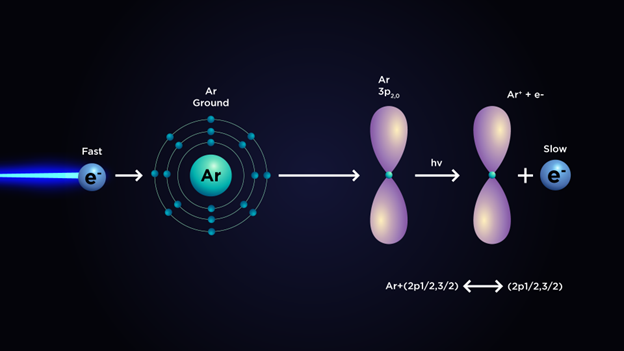
Post, May 27, 2026 • CRF researchers Haw-Wei Lin, Eric Smoll, Jonathan Frank and Dave Chandler published a paper in Journal of Physics B entitled, "Absolute Cross Section Measurements via Double Resonance Ion-Imaging Mass Spectrometry: The mp51/2 n(p′/f′) Autoionizing Rydberg States of Argon." Employing a novel in situ double-resonance scheme using an ion-imaging mass spectrometer...

Multiphase Systems

Page • The interaction of gas phase molecules with other phases bridges two systems—condensed phase and gas phase—that are described by different paradigms of chemical physics. Our research in multiphase systems focuses on understanding how these regimes affect each other and the nature of the intermediary region between the phases. Two areas...

Near-Surface Imaging

Page • Figure 1 Gas-surface interfaces are present in many important chemical systems.  From the valorization of methane at catalytically active surfaces, to the impinging of combustion processes on chemically inert interfaces, the complex heterogeneous chemistry and molecular energy transfer processes occurring in the gas phase very near to interfaces must be...

Neighboring Groups can turn Quantum Tunneling On and Off

Post, May 6, 2026 • Tim Zwier, Judit Zádor and Blair Welsh from the CRF, with colleagues Sven Herbers from the Université Paris Est and Edwin L Sibert III from University of Wisconsin Madison, published a paper on "Methyl Rotor State-Dependent Quenching of OH Tunneling in 2,6-Dimethylphenol" in "The Journal of Physical Chemistry Letters". Tunneling...

New engine optics to fuel future research

Post, November 29, 2017 • by Michael PadillaSandia team develops optical diagnostic that helps improve fuel economy while reducing emissionsA new optical device at Sandia National Laboratories that helps researchers image pollutants in combusting fuel sprays might lead to clearer skies in the future.An optical setup developed by researchers at Sandia’s Combustion Research Facility and...
Placeholder

New Formation Mechanism for Surface Oxide Observed in Pt Catalysis

Post, June 12, 2026 • Chris Kliewer, together with Timothy Livingston Large and Brian Patterson, published a paper in "The Journal of Physical Chemistry C" on "Kinetics of the Formation of a High-Temperature Surface Oxide on Pt(111) under Near-Ambient Pressure O2" In this work, the authors used near-ambient pressure X-ray photoelectron spectroscopy (NAP-XPS) to investigate...

New Perspectives on Vibrational Energy Transfer in Energetic Materials

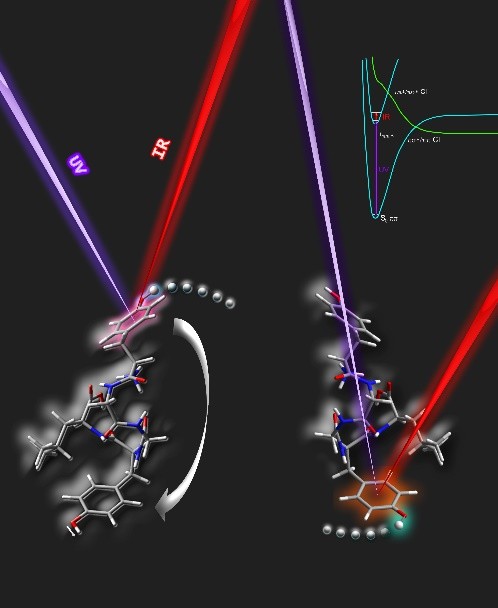
Post, May 6, 2026 • CRF researchers Daniel Carlson, Paul Schrader, Kendrew Au, and Krupa Ramasesha, together with River Leversee from CU Boulder and Sandia colleagues Neil Cole-Filipiak, Robert Knepper, and Mitchell Wood, have employed ultrafast spectroscopic tools to probe the detailed energy flow that determines initiation processes in energetic materials. Their work is highlighted...
Journal cover

News

Page • Recent Posts See Previous Posts

Nils Hansen

Staff Page • Manager, R&D Science and Engineering. Visit my personal staff page here.

Nils Hansen Receives Wilhelm Jost Memorial Medal

Post, June 24, 2024 • Nils Hansen, a physical chemist, has been chosen to receive the Wilhelm Jost Memorial Medal and deliver the Jost memorial lectures, awarded by the Göttingen Academy of Sciences and Humanities with guidance from the German Bunsen Society for Physical Chemistry. This award is given to an internationally acclaimed physical chemist...
Nils Hansen, a physical chemist, working

Non-equilibrium Chemistry Driven by Transport

Page • Chemical reactions give rise to nascent products, termed non-equilibrium (NE), whose energy distribution does not correspond to that of either the reactants or the bath. Such NE product ensembles have different effective reactivity relative to their thermal equivalents, thereby impacting important macroscopic quantities in a complex reactive system. NE products...

Norm Bartelt

Staff Page • Materials Physics. Biography My work over the last forty years has focused on improving the understanding of the dynamical processes which are responsible the structure and morphology of solid surfaces. Much of this work has involved constructing statistical mechanical models that allow macroscopic behavior to be traced to atomic events. Most...
Image of Norm Bartelt

Off-Road Diesel Engine Combustion Laboratory

Page • Figure 1 Research in the Off-Road Diesel Engine Combustion Laboratory is conducted using a single-cylinder, 6.7L research engine. This size class represents one of the most ubiquitous engines in off-road applications. Shown below is the all-metal variant of this engine. We are in the process of developing an optical section in...
Results 76–100 of 140